





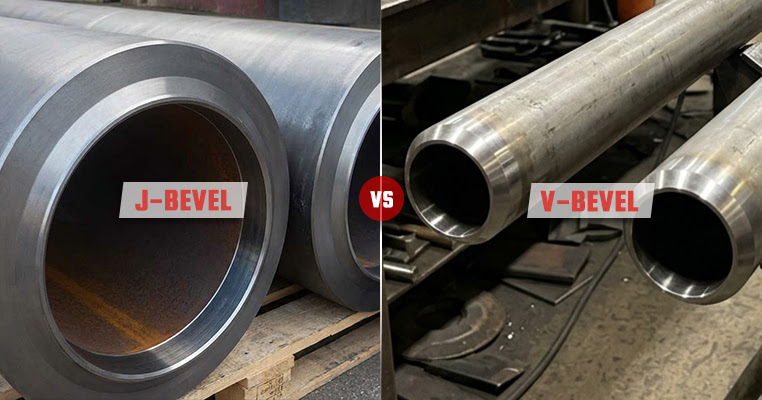
The V-bevel is the default choice for most welders and fabricators, and the reason is pretty obvious. You can flame cut it, grind it to spec, fit it up – and you’re done. The J-bevel is a whole different situation – it calls for a dedicated beveling machine, tighter dimensional control and a qualified procedure that most shops and field crews just don’t have access to. That accessibility gap is a factor when you’re working under schedule pressure or in a field environment where equipment options are limited.
What actually gets lost in that default choice is the cost of filling a wide-angle groove on a pipe with a wall thickness above 7/8 in. More filler metal means more passes, more arc time, more heat piling up in the joint and a much higher chance that distortion pulls a spool out of tolerance before it even gets to the pressure test. That cost adds up – and it all traces back to a single prep choice that didn’t get much thought.
The two groove types each have their place, and neither one is automatically the right answer for every job. A V-bevel is a great choice when the application calls for it. The J-prep justifies its extra setup cost when the numbers are there to back it up – and past a given wall thickness, the numbers usually are. In my experience, that’s where most of the preventable rework starts.
Get started with each one of these bevel types to find the right fit for your welds.
How a J-Groove Is Different From a V-Groove
A V-groove cuts two straight angled walls into the pipe, and the walls slope down until they meet at a pointed root. A J-groove is a bit different – one side stays vertical as the other curves inward from the pipe face, straight down to a rounded root radius.
That curved radius is the defining feature of a J-groove, and it changes the whole geometry of the joint. Just like a V-groove, it still has a land at the bottom and a root opening between the two pipe ends. The walls above it don’t splay outward at nearly the same wide angle. A V-groove runs with a wider half-angle to give welders easier access to the root, and the wide opening is what gives it that recognizable profile.
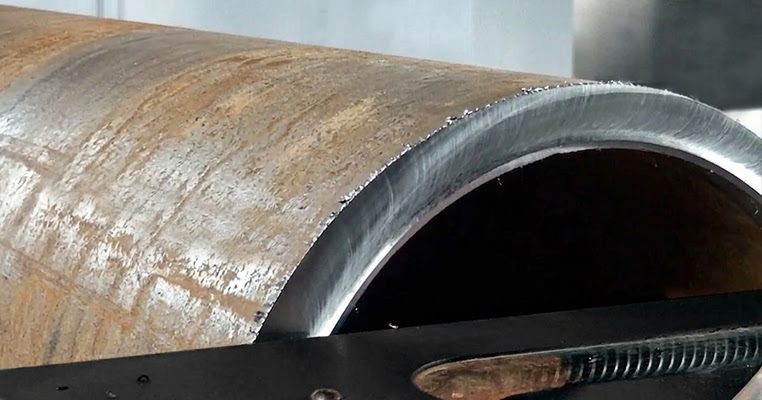
The two grooves are well-named, as it turns out. A V-groove looks just like the letter – two straight lines that angle down and meet at a point. A J-groove follows that same idea – the curve arcs down and settles into a flat base at the bottom.
With heavy-wall pipe, the difference in gap size between a V-groove and a J-groove starts to add up. A V-groove cut into the thick material has straight walls that open up into a much wider gap at the top of the joint. A J-groove’s tighter angle and curved profile hold the joint width narrower – even as the wall thickness increases. Whichever groove profile gets cut at the prep stage, it sets the conditions for everything that follows in the weld.
How a J-Bevel Saves on Filler Metal
The shape of your groove on heavy-wall pipe has a direct effect on how much weld metal you’ll need to fill it. J-bevels and V-bevels each get the job done. But the weld metal needed is not the same – on thick-wall joints, a J-bevel can cut that volume by 30-40% and on a large job, that difference matters quite a bit.
Less volume in a joint means fewer passes to it, which also means less arc time, less heat going into the part and less wire or rod per joint. Multiply that across a full fabrication run with dozens (or hundreds) of joints, and those per-joint savings start to add up considerably.
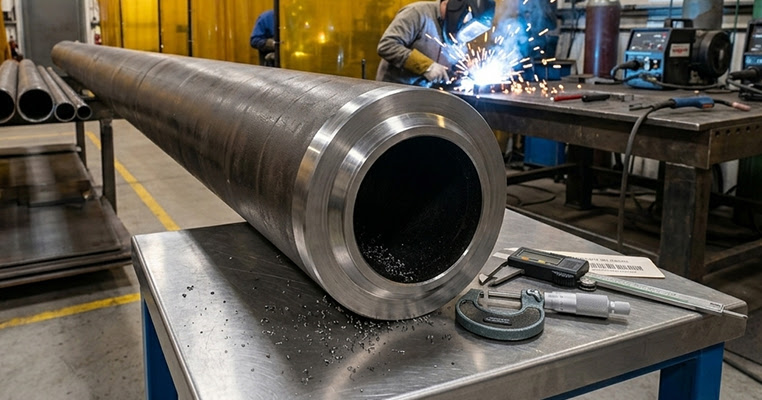
ASME and AWS groove geometry standards give fabricators the math they need to calculate this. A J-groove prep has a noticeably smaller cross-sectional area than a comparable V-groove at the same wall thickness. That difference shows up in material and labor costs. On paper, it makes a pretty strong case for the J-groove.
A 35% reduction in filler metal across a 200-joint spool job is a figure that’s worth actually running the numbers on. The consumable savings alone add up fast. That doesn’t even factor in the reduction in welder hours and what that does to the schedule. Project managers and estimators get very interested when they see numbers like these laid out – it’s probably my favorite part of the cost analysis conversation, because the math more or less makes the argument on its own.
That raises a fair question, though. If J-bevels have this benefit on volume and cost, V-bevels still dominate on most field jobs for reasons beyond what the math alone would show – and the next section gets into that.
Why V-Bevels Work Best in the Field
V-bevels have been the default standard for cross-country pipeline work under API 1104 for a reason – for the field conditions where most of this work gets done, they’re just plain helpful. A V-groove can be cut with a torch or knocked out with a basic angle grinder – no CNC machines, no dedicated beveling equipment and no shop setup are needed. For a crew that works miles from the nearest town, that level of simplicity does matter. Most field crews already have everything they need to prep a V-bevel right there on the truck, and if you’re out at a remote river crossing in the middle of nowhere, that built-in convenience counts for quite a bit.
A J-bevel will get you a more efficient weld joint – and on paper, it’s the stronger option. The curved groove geometry cuts down on the amount of filler material needed and tends to produce a cleaner joint profile all around. But to cut a curved groove correctly, you usually need dedicated equipment – the kind that hardly ever makes it out to remote job sites. It’s heavy and hard to move around, and most field operations just aren’t set up for it.
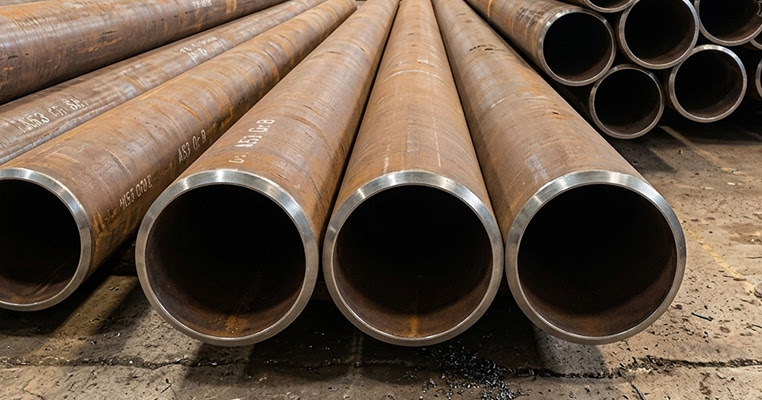
What API 1104 captures, more than anything, is a sense of how pipeline construction comes together in the field. A weld that your crew can prep and execute reliably with the tools already on hand will always outperform a theoretically better joint that no one on site can set up correctly. The V-bevel doesn’t win because it’s the perfect joint design in some controlled lab environment – it wins because it’s the joint that actually gets done right when it matters.
API 1104 is written that way for just that reason – and if you do remote cross-country pipeline work, the logic behind it holds up just fine.
What Too Much Heat Does to Metal
Less total heat goes into the base metal with fewer weld passes, and in heavy-wall work, that difference starts to add up. A J-bevel’s narrower groove takes less filler to fill, which keeps your arc time shorter and the heat-affected zone much tighter.
With high-alloy piping and pressure vessel work, that’s a very real concern. Those materials can only take on a certain amount of heat before the metal around the weld starts to weaken. When the cumulative heat input gets too high, it’ll either soften that surrounding zone or leave residual stress locked right into the pipe wall – and neither one is something that you want to find out about after the final inspection.
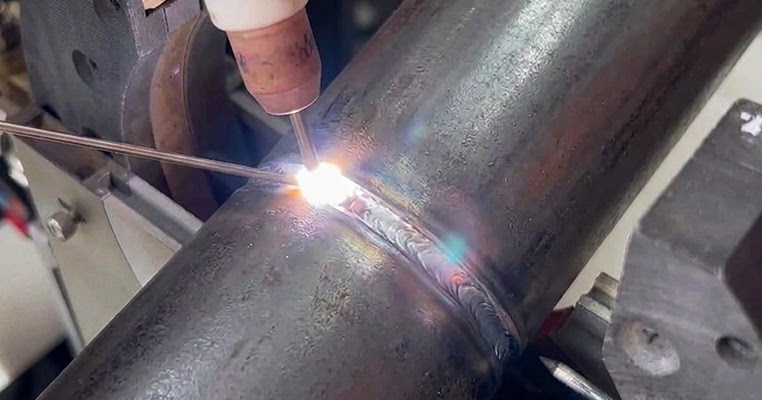
When a thick-wall spool pulls itself out of alignment after a long weld sequence, it’s one of the more aggravating issues to manage on a job – and in my experience, it happens far more than it should. The distortion is a direct result of heat cycling through the same material again and again, and each pass can add a little more stress on top of what the previous one left behind. At some point, that stress builds past what the metal can absorb, and it moves. The repair work that you’re left with afterward is its own whole separate problem.
The V-bevel has a wider groove, which means it just takes more passes to fill. More passes bring more heat, more of a chance of distortion and a longer list of variables to stay on top of as the weld progresses. The J-bevel’s geometry keeps that shorter and more manageable – fewer passes, less heat buildup and much better control over the end result. When the metallurgy doesn’t leave much margin for error, and the material costs are high, that level of control is worth quite a bit.
How Your Code Shapes the Bevel Choice
That context matters quite a bit with these groove geometries.
ASME B31.3 covers process piping, and fabricators that work under this code have a strong preference for J-bevels. The narrower groove gives you much tighter control over the mechanical properties in the finished weld. That level of control is worth quite a bit in this line of work. When a pipe is carrying chemicals, high-pressure fluids or anything else in that demanding category, those properties have to come out just right. Process piping environments don’t leave you much room to work with. The margin for error is zero.
API 1104 operates on a different set of assumptions altogether. That code was built around pipeline construction – field-based work where speed and limited access are what matter. V-bevels fit right into that workflow because they’re faster to prep and much easier out in the field. The geometry just fits the environment.
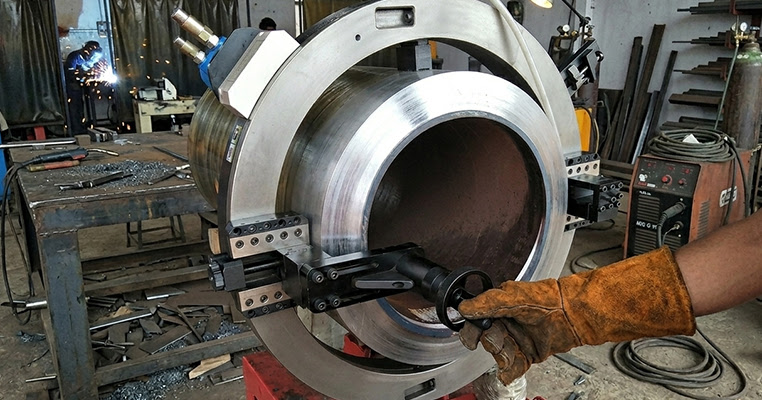
You want this finished out before a project starts – not partway through it. Your Welding Procedure Specification ties your groove design directly to the qualification process, and once that qualification is done, any mid-project changes just aren’t an option – not without another expensive requalification, anyway.
The code that you work under shapes which bevel geometry is even an option for a given job. Plenty of fabricators treat the code choice like a box to check off (almost like paperwork). But it’s actually one of the first decisions you make, and nearly everything that comes after it connects back to that choice.
When Should You Use a Compound Bevel
Once the wall gets thick enough, a pure J-bevel and a pure V-bevel start to work against you – just not in the same way. A V-bevel opens as high as it is wide and burns through a massive volume of filler metal long before the joint is anywhere near done. A J-bevel is more efficient with the fill. But precise access to the root down in that groove is pretty frustrating.
Hybrid designs are the answer to this problem. A compound bevel pairs a J-shaped root with a V-shaped fill zone above it – so you get the tight root access of a J-groove and the more manageable fill passes of a V-groove all in one profile. A double-V design, sometimes called an X-groove, splits the weld across the two faces of the pipe wall, which brings the total filler volume way down without giving up any of the penetration that you need.
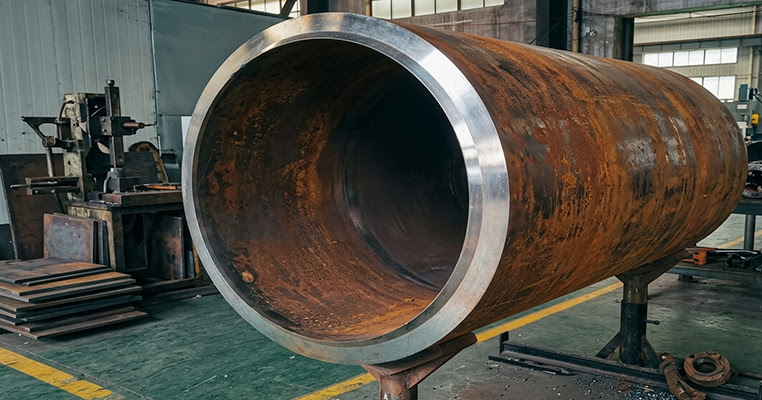
At some point, it’s worth being honest with yourself about whether you’ve been defaulting to the same groove design on every joint out of habit – even when the wall thickness called for something different. Most welders fall into that pattern at one point or another, and it’s nothing to stress about. What it can do is quietly burn through extra time and material when you’re working with thicker walls.
With any of these designs, the main trade-off is between root access and fill efficiency. A more open groove makes the root easier to get into and work with. But you’ll burn through more filler metal to close it out. A tighter groove saves on filler, though it puts more pressure on the welder at the root. Compound and double-V designs try to find that middle ground – and on very thick walls, they tend to land in a noticeably better position than either single-groove option could pull off on its own.
Where The Pros Get Their Welding Rentals
Bad habits have a sneaky way of working their way into calls like this. Plenty of crews just default to the same groove design because it worked on the last job – it’s a very understandable instinct. The best groove for a shop fabrication job on 1.57-inch wall pipe can look nothing like what made sense on a field pipeline two years ago, and when those two situations get treated as interchangeable, the costs have a quiet way of adding up in the background.
But the differences aren’t always obvious. Wall thickness, material grade, position, access and the welding process all play into what a groove should actually look like for a given job. When any one of those factors changes, the geometry that worked before may no longer be the right choice – and the margin for error on pressure vessel work doesn’t leave much room to figure that out mid-job.
The right bevel geometry can only get you so far if the equipment behind it isn’t doing its job. Even a perfect bevel angle won’t do much for you if the welder, the power source or any of the supporting gear isn’t performing the way it needs to. We can help with that. Whether your crew needs welding machines, positioners, protective equipment or anything else for pipe and pressure vessel work, at Red-D-Arc, we have options to rent or buy that are built around the day-to-day needs of these jobs. Our rental fleet covers a range of equipment so you’re not locked into a buy for something that you might only need for one project. Check us out at Red-D-Arc.com to browse the full catalog and get your next project set up with the right gear from the start.



Leave a Reply