





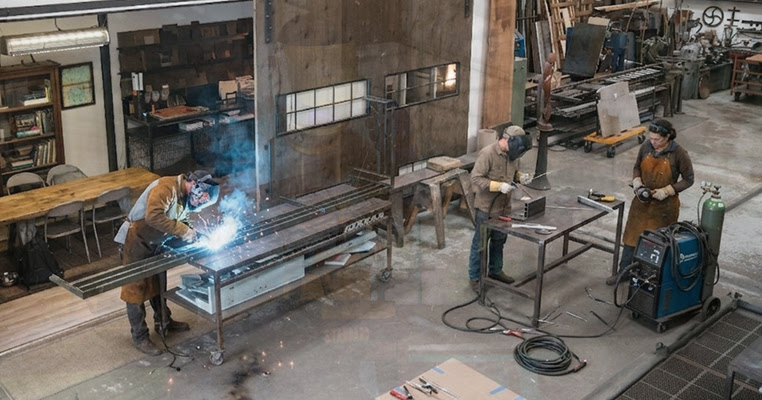
Turnarounds move fast, and every idle hour on the schedule carries a cost. Plant managers and weld supervisors usually manage dozens of moving parts at once (equipment, personnel, permits, materials), all as they’re up against a hard restart deadline with zero flexibility built into it. A temporary weld shop sits right at the center of all that pressure, and a poorly set up shop can stall the whole event before a single arc is ever struck.
Most of the big decisions on a job like this need to be made long before anyone sets foot on site. Power infrastructure, shop placement, compliance paperwork, consumable inventory – it needs to be locked in well ahead instead of being finished out after the crew has already arrived. A crew that sits idle as the site electrician figures out the power situation, or a hot work permit that no one filed, which brings everything to a dead stop on day one – neither of these is a minor setback. These delays are often avoidable.
That said, avoidable doesn’t mean automatic – it takes actual coordination and a plan to get a temporary weld shop set up. The teams that do it well are usually the ones that start early, assign ownership over each part of the setup and treat the pre-arrival checklist as seriously as the welding itself.
This guide covers how to set up your temporary weld shop for a smooth turnaround.
Pick the Best Spot for Your Shop
The placement of your temporary weld shop is one of the decisions that has a big effect on day-to-day productivity. If the shop is too far away from the work, your welders will haul heavy materials and equipment back and forth all day long. Those trips add up fast – and a crew that hauls large pipe spools back and forth across the refinery floor on every trip is an example. That repetitive and unnecessary movement wears everyone out fast, and it can push your whole turnaround back in ways that are very hard to make up for. Careful placement from the start is one of the best moves that you can make to protect your schedule.
A starting point is the material flow. Map out the path that your pipe, fittings and fabricated pieces will travel from the shop floor to the final installation point and then work backward from there. The shorter that path is, the less those materials need to be handled, and the less they get handled, the less likely something is to get damaged along the way.
Plan ventilation and fume control as you select a location. Ventilation must control welding fume exposure. Direct exhaust away from other crews working nearby. Lighting also tends to fall lower on the priority list than it probably should. A well-lit shop cuts down on mistakes and helps work move steadily through night shifts. That matters quite a bit on any turnaround running around the clock.
Heavy equipment access also deserves attention in your planning process. Forklifts and cranes need a dedicated path in and out of your shop, and it shouldn’t be something that clogs up the rest of the site every time equipment needs to move.
Sort Out the Power Supply First
With a location locked in, power is the next step to sort out.
Have the electrical team calculate the combined input power requirements of the equipment that will operate simultaneously, including voltage, phase, starting loads and duty cycles. Welders, grinders, lights and the ventilation system all pull power at the exact same time during peak hours. Sizing only for average demand can leave the shop short of power during peak use.
Get in touch with the facility’s electrical team as early as you can. The team needs plenty of lead time to look at what power is actually available and to get any necessary arrangements worked out on their end. A conversation that waits until setup day can cost you hours (or days) of lost work, and at that point, your whole schedule takes a hit.
A couple of mistakes pop up again and again with this. The first is assuming that the existing facility panel can accept the extra load without checking its capacity. The second is a mismatch between 480V three-phase needs and single-phase availability that gets missed until the equipment is already sitting on the floor. Both of these are avoidable with a little planning ahead of time.
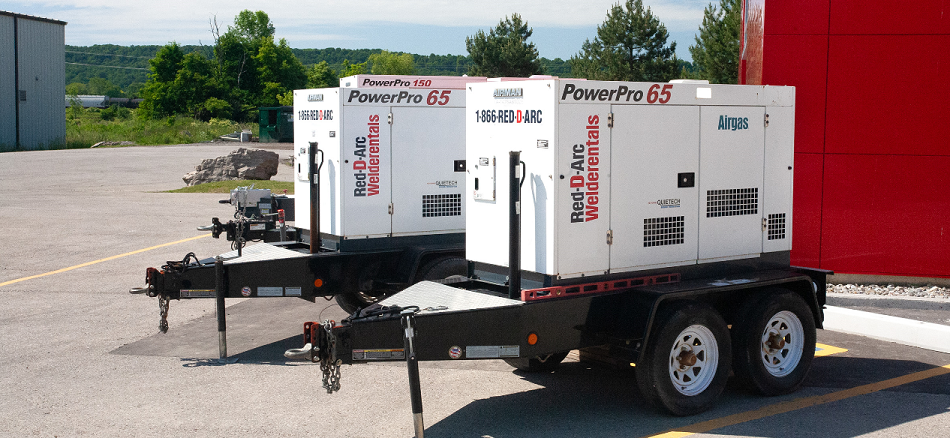
Generators can provide a flexible power source when facility power is unavailable. A generator sized for your peak load should be selected with fuel use, distribution equipment and site conditions in mind. Compare generator power with available facility power and plan any backup capacity around the consequences of an interruption.
Get the Safety and Permit Rules Done Early
Permits and safety planning are essential parts of a temporary weld shop setup. A crew that arrives on-site ready to work but without the right permits can get shut down before a single arc is ever struck. That type of delay adds up fast.
A temporary weld shop must meet the requirements that apply to its location and work. Federal OSHA standards set the baseline, state requirements and local fire codes may add obligations, and the host facility’s own contractor policies can be stricter than either of the others. Obtain the facility’s requirements before mobilizing. A quick call to the facility coordinator to get their full checklist before any work begins is well worth it – don’t wait until you’re already on site.
Follow the facility’s hot work authorization process before welding or cutting. Confirm when a permit and fire watch are required, including monitoring after the work ends. Secure compressed gas cylinders, protect them from heat and damage, and meet the applicable separation requirements for oxygen and fuel gas storage.
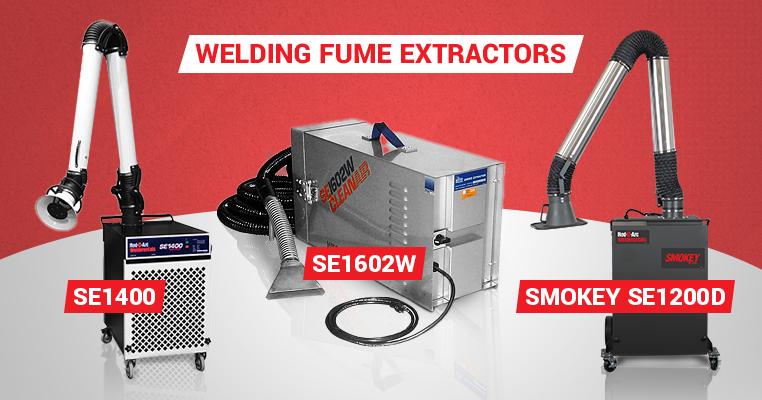
Welding fumes can pose serious health risks, so any enclosed or semi-enclosed space should have a plan for fresh air intake and contaminated air removal. Review exposure controls with the facility’s safety team well before any inspection – that’s not a detail that you want to have figured out for the first time as someone’s watching.
Have Your Tools and Consumables Ready Early
Your materials need to be on-site before the first arc is struck – it’s one of the best steps that you can take to set a turnaround up for success. If even one item runs short or goes missing, the whole operation starts to drag.
Electrode rods are a perfect example of where a single oversight can cost you a full day of production. Leave one rod type off of your pre-order, and an entire crew ends up standing around as calls go out to find a last-minute supplier. That downtime is expensive – and it’s usually avoidable with a little forethought.
A dedicated storekeeper is one of the more underrated parts of a smooth turnaround. Put one person in charge of inventory for the full run of the job. Their only responsibility is to track what gets used each day and to flag anything that’s running low before it can derail the work. Without that layer of oversight, small shortages can slip by unnoticed until they stop the job cold.
Well before the turnaround gets underway, put together a materials list that covers the full scope of work. Go through it line by line to make sure nothing gets left off, and then order a little more than you’ll actually need – especially on high-use items like grinding discs and welding wire. Those are the items that disappear fast when a job is running at full speed. A small surplus on hand is much less painful than a crew standing around waiting on a delivery.
A little extra preparation up front can save you a massive amount of trouble once the work gets moving. Materials logistics is probably not the most glamorous part of turnaround planning – everyone’s eyes glaze over when it comes up. But it’s still one area where not enough preparation tends to hurt the most.
Have Your Weld Procedures and QC Docs Ready
Well before the first arc is ever struck, your records need to be in order. Every Welding Procedure Specification and Procedure Qualification Record needs to be organized, printed and ready to hand over the second an inspector asks for it. Your welder qualifications work the same way – they need to be current, and they need to be right there when you need them.
Turnaround inspectors don’t have a minute to spare. A missing document or a file buried in the wrong folder can stop welding as somebody tracks it down and gets it finished. The last place you want to lose momentum is right in the middle of an active turnaround.
Verify each welder’s qualifications, permitted ranges and continuity records against the applicable code and project requirements before work starts. A missing or invalid qualification can require reassignment or retesting, disrupting the schedule.
With that in mind, it pays to map out your inspector hold points and QC checkpoints well before the job even starts. Knowing where an inspector needs to sign off lets you build your schedule and workflow around those stops ahead of time – and you won’t have to scramble and readjust when they actually show up. A little planning up front matters once work is moving and your crew is at full speed.
What Slows Down the Work in Your Shop
A temporary weld shop on an around-the-clock schedule runs very differently from your standard day-shift operation. The pace never lets up, the crew rotates at off hours, and the gap from one shift to the next is right where most problems get created. A welder who walks in at 2 a.m. needs to know where the previous crew left off – with no need to track anyone down for a five-minute update.
Fatigue hits your judgment well before it hits your performance – a tired welder can seem fine, but their decisions quietly aren’t. That gap should factor into how you map out your shift structure. Even a 30-minute stagger in start times can matter quite a bit – it spreads out the congestion at the start of a shift and prevents everyone from crowding the same entry points all at once.
Station rotation is another big part of this. When welders cycle through different positions over the course of a shift (not locked into one station all night), the floor stays open, and the work areas don’t start overlapping. It’s much easier to hold a steady pace when no single station ends up overloaded.
Of the issues that can derail a 24-hour shop during crew changes, a communication lapse is the one that does the most damage. A basic written log at each station (the active weld, the last completed joint and any hold points) gives the incoming crew a clean place to start from with no uncertainty. Verbal handoffs can make sense in theory. But a loud shop and a tired crew are a pretty bad combination, and the specifics that actually matter like to get lost. Build written logs into every shift change as a standard practice, and most communication gaps will sort themselves out.
Plan Your Welding Equipment Rentals
A temporary weld shop carries the exact same dangers, the same compliance requirements and the same chance for expensive failure as any permanent facility – it just doesn’t always get treated that way. The one difference with a temp setup is time – you just have less of it, which actually makes the planning phase matter even more. Preparation before the crew arrives helps reduce avoidable downtime.
Before the crew arrives, the best place to start is with the parts of the setup that are the hardest to fix once the job is already underway – power supply, location, permits and paperwork. A problem in any one of these areas will do the most damage, and they also need the most lead time to get it right. Once those are locked in, keep tracking equipment delivery, consumables and crew readiness against the same plan.
Red-D-Arc can help you plan equipment for your turnaround, including welding machines, positioners, generators and fume extraction equipment. Review your welding processes, power requirements and delivery schedule with our team so the equipment is ready when your crew arrives. Explore Red-D-Arc equipment and rental options to plan your next project.



Leave a Reply