





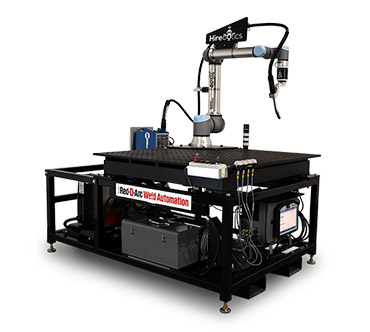
Robotic welding can help manufacturers improve productivity, repeatability and capacity when the process is a good fit for automation. Successful integration starts with consistent parts, suitable fixtures and a qualified welding procedure. Skilled people remain essential for programming, setup, inspection and maintenance.
Benefit One: Productivity
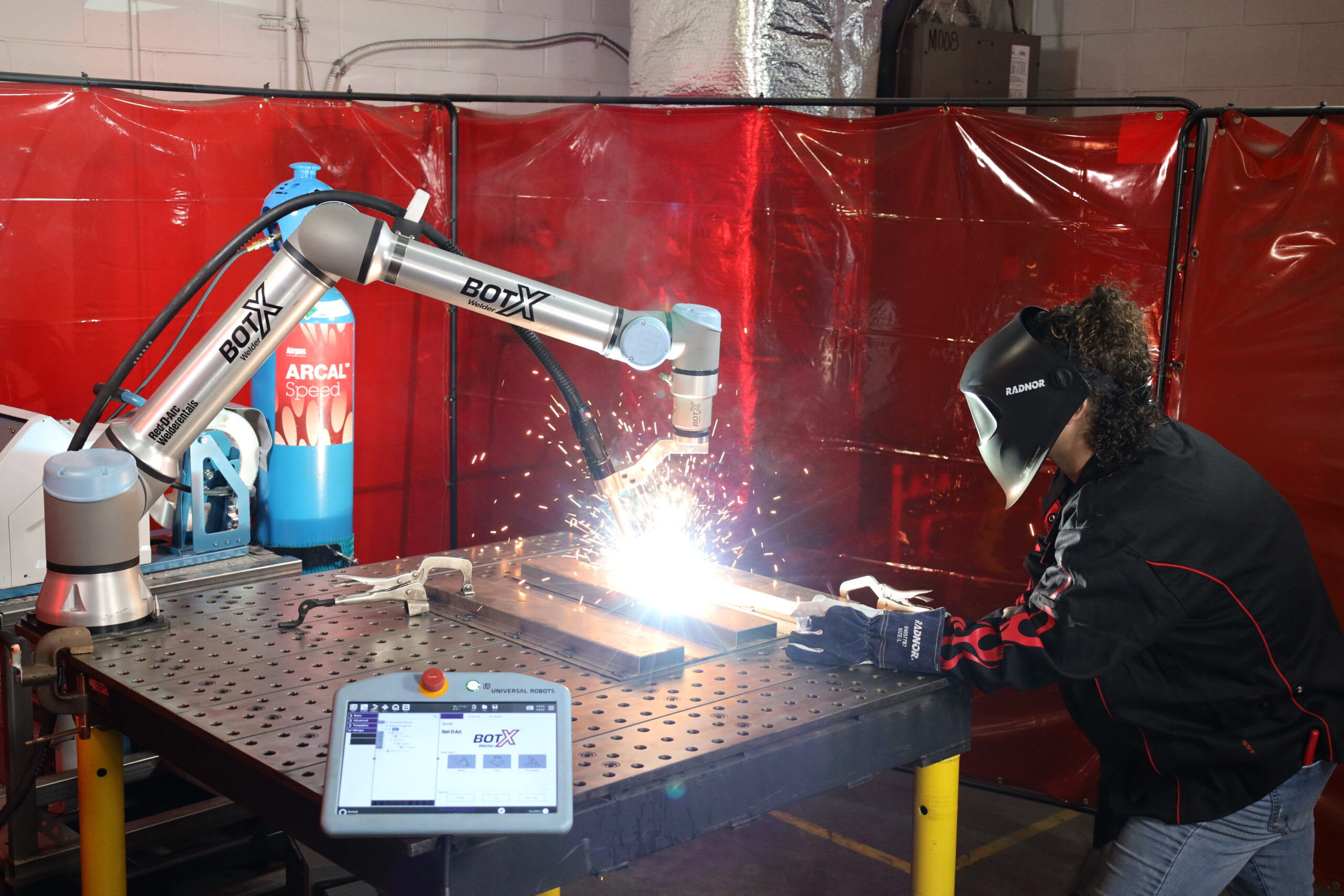
A robot can repeat programmed movements and maintain a consistent travel speed from one weld to the next. This can increase arc-on time and reduce delays between welds, particularly on repeat production work. The achievable speed depends on the joint, material, welding process and required weld quality.
Automation will not resolve every production bottleneck. Part preparation, loading, unloading and downstream operations must keep pace with the welding cell. Review the entire workflow with an automation specialist before selecting equipment.
Assigning repeatable welds to a robot can free skilled welders for setup, troubleshooting and work that requires more adaptability. Include training and a realistic plan for operator coverage in the project.
Benefit Two: Consistent Quality
Robots can reproduce programmed work angles, travel angles, travel speeds and contact-tip-to-work distances. With consistent fit-up and suitable parameters, this repeatability can help reduce variation between parts.
Repeatability does not guarantee a sound weld. A robot will also repeat an unsuitable program. Qualify the procedure where required, confirm the first parts meet acceptance criteria and maintain inspection throughout production. Control fixture wear, part tolerances and consumable condition as carefully as the program itself.
Experienced welders bring valuable knowledge to robot programming. Their understanding of joint access, heat input and weld defects helps turn repeatable motion into a reliable welding process.
Benefit Three: Scalable Capacity
Additional welding cells can help support higher production volumes when demand justifies the investment. Rental options may also provide flexibility for evaluating automation or meeting a temporary production requirement; availability and terms depend on the equipment and project.
Plan capacity around the complete cell, including fixturing, material handling, floor space and staffing. Positioners and compatible sensing or tracking features can expand a system’s capabilities, but each option must suit the application.
Benefit Four: Reduced Exposure to Repetitive Work
A properly designed cell can reduce the time operators spend close to the arc and can take over repetitive movements or awkward welding positions. These benefits depend on the layout, loading method and safeguards.
Robotic welding still creates heat, sparks, arc radiation and fumes. A collaborative robot does not make the welding process inherently safe or remove the need for an application-specific risk assessment. Provide suitable guarding, arc screening, fume control, operating procedures and training for the complete installation.
Choose Automation Around Your Application
Collaborative welding systems such as the BotX welding cobot can make programming and deployment more accessible for suitable fabrication work. Evaluate part variety, joint access, cycle time and changeover needs before deciding how to automate.
Red-D-Arc can help assess equipment options and integration requirements. Explore Red-D-Arc welding and automation equipment to start planning a system around your production needs.



Leave a Reply