





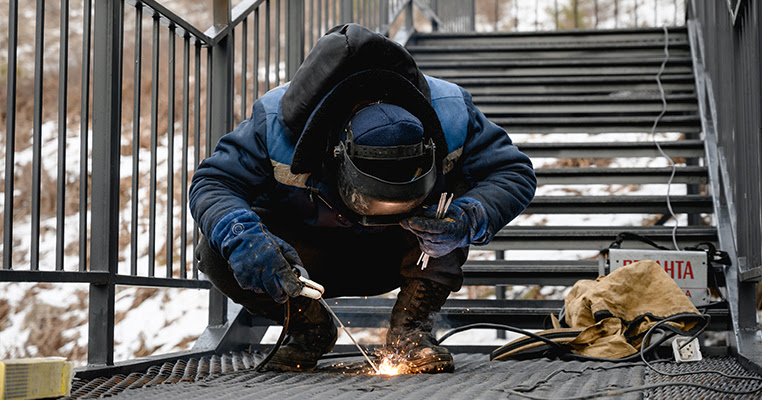
Cold weather brings some tough problems for welding equipment, and most of it depends on basic physics. The chemical reactions inside your batteries start to slow down quite a bit when temperatures drop, so you’re going to have less cranking power available when you start your equipment and maintain a steady voltage. Condensation also poses a serious risk. Bringing your machines in from the cold or moving them between areas with different temperatures can cause moisture to build up inside your electrical systems and cause damage over time. Metal surfaces around your work area will also pull heat away from the weld pool much faster than they would in warmer conditions and make it much harder to get the fusion you need if you don’t make some adjustments to your techniques.
Winter welding takes a different strategy compared to what you’d use when the weather is nice and warm. Your equipment needs some prep work first – it won’t perform the same way it did back in July, and you can’t simply assume everything will work like normal. Gas density actually changes with temperature, so those flow meters you had dialed in for warm conditions are going to need some adjustments. Cable insulation that moved freely and stayed flexible during the summer gets stiff and starts to crack pretty easily once January hits. Power delivery changes, shielding gas behaves differently, and every system on your setup responds to the cold. These problems tend to feed into the next one, and when multiple issues start to pile up, they can shut down your whole operation.
Here’s how lower temperatures can affect your welding gear and what you can do about it!
When the Cold Affects Your Equipment
Cold weather is rough on welding equipment, and if something’s going to fail on you, it’s usually the power supply that goes first. Portable welders are great for lots of different jobs, and welders usually love the convenience that they give you. But their battery packs can struggle when it gets cold outside. When the temperature drops below freezing, lithium-ion batteries can lose half of their normal capacity, and sometimes it’s even worse than that. When you’re actually out there on the job, your portable welder could shut down right in the middle of a weld.
Engine-driven welders have their own problems when the weather gets cold. Once temperatures drop below freezing, you’ll find that just starting them is a pain. Block heaters are needed if you want to warm the engine up enough to strike an arc at all. Synthetic oils can also help quite a bit because they stay liquid in the cold temperatures.
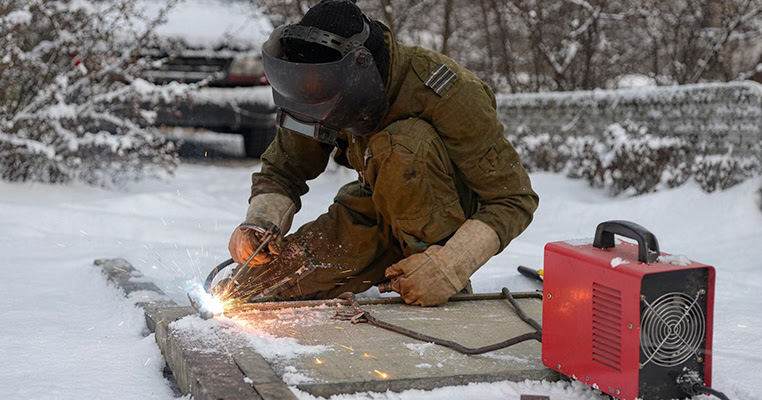
The challenges of extreme cold are best illustrated by repair crews working in Arctic conditions, such as those on the Trans-Alaska Pipeline. In sub-zero environments, technicians often have to implement strict “battery rotation” protocols for cordless tools and portable testing equipment. Because lithium-ion performance can drop by over 50% once temperatures hit the negatives, crews keep backup power packs in heated “hot boxes” or insulated tents. By rotating batteries every hour, they ensure the cold never has a chance to drop the voltage low enough to kill the tool mid-task—a necessity when a single equipment failure can stall an entire crew in a remote location.
Inverter-based welding machines have a bit of a weak point in cold weather, and they’ll struggle more when the temperatures drop than the older transformer-style models ever did. The electronic parts that are packed inside modern inverters just don’t like big temperature swings very much. Transformer machines use a lot more basic technology under the hood, and freezing conditions won’t give them nearly as much grief. Inverters are still great machines with plenty of benefits. But if you’re planning to work outside during the winter months, you’ll need to account for how sensitive they can be to the cold.
Wire Feed Problems in Cold Weather
Cold temperatures can cause problems with wire feed systems, and most welders won’t know about this problem until they’re out in the field on a job. The gun liner is usually the first part that starts to cause problems. When temperatures drop below freezing, these liners lose their flexibility and get rigid. Think of a garden hose that’s been left outside overnight in the winter; it gets stiff and hard to work with. Your MIG gun liner does the exact same thing.
The wire starts to buckle and twist inside the liner instead of going straight through to the contact tip. Welders call this a bird’s nest, and the name fits when you see what it looks like. The wire bunches up behind the drive rolls and jams up the entire feed system, shutting everything down until it gets cleared out.
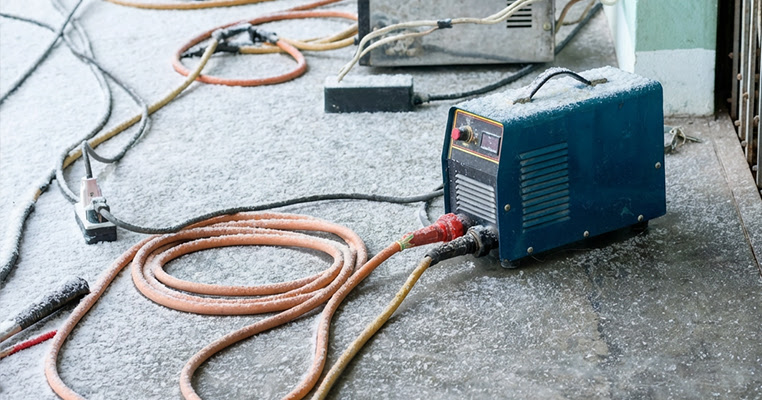
Wire feed lubricants become another big issue when the temperature starts to drop. Most of the standard lubricants you’ll find on the market will start to thicken up quite a bit when you get down to around 20°F or lower. When that happens, your drive motors have to work significantly harder just to push the wire through all that extra resistance.
Pipeline welders up in North Dakota have dealt with this exact problem for years. Most of them figured out pretty early on that the smartest move was to keep spare gun assemblies stored inside their heated trucks. Between welds, they’d swap out their equipment to make sure nothing got cold enough to cause problems. If you don’t have those extra parts on hand, a welder can spend most of the day on jam issues rather than actual work.
Aluminum wire creates even bigger problems when temperatures drop below freezing. Aluminum is softer than steel wire from the start, and this softness becomes a big problem in the cold. Pair that soft metal with liners that have gone stiff and lubricant that’s turned thick and sluggish, and the wire just can’t hold its shape under the pressure from the drive rolls. Once these mechanical problems pile up all at the same time, a welding job becomes very frustrating.
Water Damage to Your Welding Equipment
When you bring a welder in from the cold and set it up in your heated shop, condensation is going to start to show up in just a few minutes. Water droplets land on the circuit boards and settle on the electronic parts as the machine heats to equilibrate with the temperature in your shop.
Plenty of operators think that after a few hours, everything has dried out and the machine is ready to go. Water has a way of sneaking into the tiniest gaps between internal parts, though, and when it sits there, it creates some new electrical connections that aren’t supposed to be there. These unwanted connections cause short circuits, and your display will start showing error codes that aren’t related to what you were actually running the machine for. Everything can run just fine for a few hours, and then you’ll see fault messages pop up that make zero sense based on the work that you were just doing moments earlier.
Insurance companies have tracked this issue for years, and their data tells a pretty simple story. The moisture damage in the winter months hits welding shops hard – we’re talking about an average cost of about $15,000 per year. This number includes the repair bills and the downtime when your equipment is out of commission, just sitting there as you wait for parts to arrive or for a service tech to fit you into their schedule, and it piles up fast.
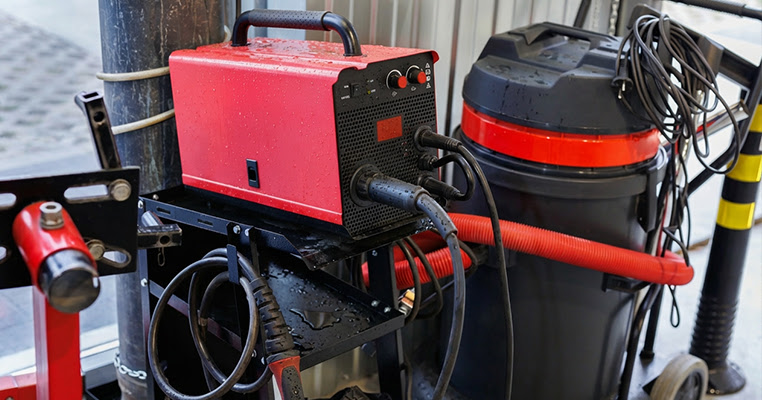
TIG welders carry an extra layer of trouble from water damage, and it all traces back to how their high-frequency start systems are designed. These machines depend on some pretty sensitive electronics to create the welding arc, and they manage this without the electrode ever making any contact with the metal (which is actually pretty impressive technology – but it also leaves a weak point). When water finds its way into those circuits, you’re looking at failures that can rack up the repair costs very quickly. High-frequency parts just weren’t built to handle any amount of moisture that gets inside.
A welder might work just fine one day, and the next day it’ll start throwing error codes you haven’t seen in years. When a tech comes out to check it, they might not connect the issue right away to that condensation problem from a few days earlier. Once they finally work out what went wrong, corrosion has usually already started to build up on the circuit boards.
How Cold Weather Affects Your Gas Flow
Cold weather creates some interesting changes in your shielding gases, and those changes can throw off the quality of your welds. Once temperatures drop below freezing, argon and most other common shielding gases get noticeably denser than they’d be on a warmer day. Cold syrup barely pours out of the bottle, but room-temperature syrup flows smoothly. Gas moves through your regulators and hoses the same way when it gets cold and thick like that.
Flow meters are calibrated at room temperature, which means they’re built to measure gas at a particular density and speed. When that same gas gets cold, it gets heavier and denser, so it flows through your equipment differently compared to what the meter was originally calibrated for. You might glance at your gauge and see 20 cubic feet per hour, which would normally make you think that you have plenty of coverage over your weld. But cold, dense gas won’t always reach your weld pool the way that it should, and that’s all because of how the density change changes the flow pattern through your system.
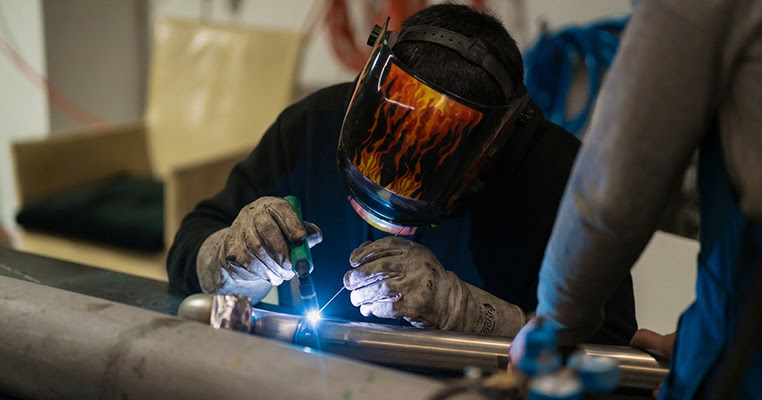
Mixed gas blends, like C25 (75% Argon / 25% CO2), encounter a specific physical hurdle when it gets cold. Carbon dioxide (CO2) has a much higher boiling point than Argon, meaning that as temperatures plummet, the pressure of the CO2 inside the tank drops significantly compared to the Argon. This can lead to a “lean” mix where the gas coming out of your torch is Argon-heavy. This shift in the gas ratio destabilizes the arc, increases spatter, and compromises the deep penetration that CO2 is supposed to provide.
Required Steel Preheating in Cold Weather
Steel behaves quite a bit differently in cold weather than most welders realize, and you’ll have to follow specific standards for how to work with it. The American Society of Mechanical Engineers has written standards for cold-weather welding. When the temperature drops below 32 degrees Fahrenheit, ASME tells you to preheat A36 steel to at least 70 degrees before you start your weld.
The reason this standard exists comes from basic physics. Cold steel can crack in almost the same way an ice cube cracks when dropped into a glass of warm water. When cold metal suddenly meets extreme heat from a welding arc, it creates what engineers call thermal shock. The metal right in the weld zone expands very fast. But the surrounding cold material stays contracted. This difference in expansion builds up internal stress throughout the metal, and it can either crack the weld right then, or it creates hidden fractures that only fail later under weight or pressure.
History is full of reminders of why preheating is vital. One of the most famous examples of cold-weather failure is the Liberty Ships of WWII, which famously suffered from “brittle fracture.” Because the steel was cold and the welds were under high stress, cracks would propagate across the entire hull instantly. In a modern context, if a crew ignores preheat standards on a structural project, they risk Hydrogen-Induced Cracking (HIC). When a hot weld is laid on freezing steel, the metal acts as a massive heat sink, “quenching” the weld far too fast. This creates a brittle, glass-like molecular structure that may look fine on the surface, but contains internal microscopic cracks that can lead to catastrophic failure later.
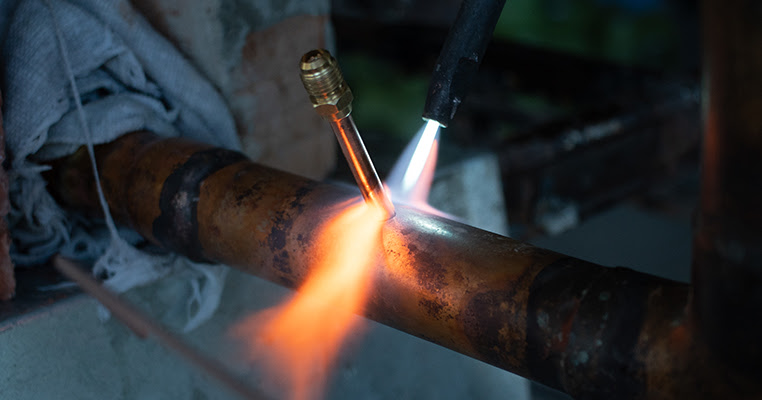
In most fabrication shops, workers check their steel temperature with infrared thermometers before they start welding. These devices work great. But temperature sticks give you another reliable way to verify your temperatures. The sticks are designed to melt at very exact temperatures, and when they reach that point, they leave a visible mark right on the metal surface. This mark confirms that your steel has reached the exact heat level that you need for a proper weld.
Insurers and equipment manufacturers are going to void your warranty the second that an inspector finds welds that aren’t meeting compliance standards. When that happens, projects fail their third-party inspections, and the costs for the rework pile up fast. Each bad weld needs to be cut out and redone from the beginning, with the correct procedures in place.
Where The Pros Get Their Welding Rentals
Cold weather brings a whole different set of problems for your welding equipment that you just won’t run into when it’s warm outside. Batteries die faster, cables get stiff and hard to manage, moisture shows up in the wrong places, and the metal itself gets harder to work with – these problems add up fast and will make even experienced welders change how they work. The temperature hits every component in your welding setup, from the power source right down to the electrode.
Equipment that’ll take a beating is what matters when the weather gets harsh, and quality machines that are available matter a lot for any project. At Red-D-Arc, we have rental and buying options for welders who need tools they can count on. Maybe you just need some backup equipment for the winter months, or maybe you want to take on bigger jobs without the massive cost up front. In either case, at Red-D-Arc.com, our full inventory gives you access to machines built to handle what welders face every day.



Leave a Reply