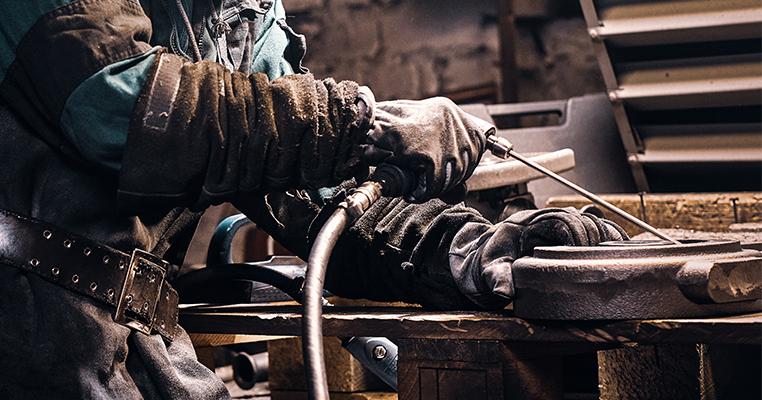


Field welding equipment needs to be portable, durable and compatible with the available welding power source. The Miller SuitCase® X-TREME™ 12VS is a voltage-sensing wire feeder designed for that type of work. Its enclosed design helps protect the wire supply and feeding components as the equipment moves around a jobsite.
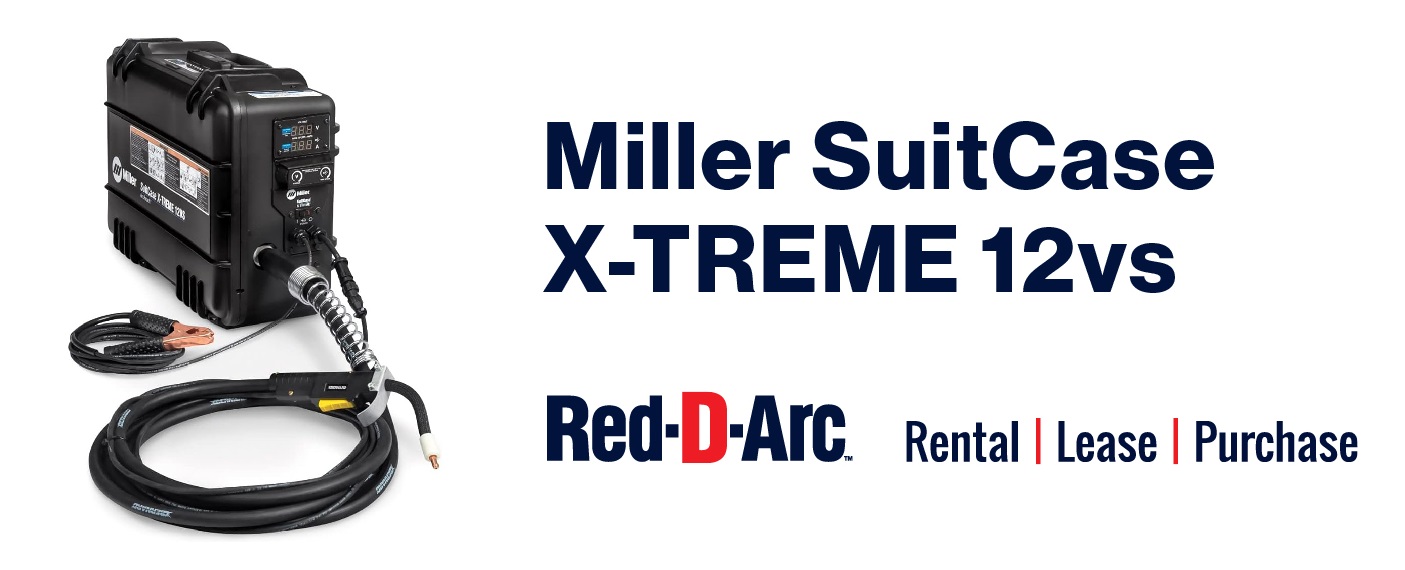
A Portable Voltage-Sensing Feeder
The 12VS operates from the welding circuit’s open-circuit and arc voltage. It can be used with compatible constant-current (CC) or constant-voltage (CV) DC welding power sources. It is a wire feeder, not a standalone welding power source, and compatibility must be checked before connecting a rental package.
Miller’s SuitCase X-TREME 8VS and 12VS specification sheet explains the operating requirements. Use the manual for the exact machine and serial number when confirming setup, ratings and supported wire sizes.
An Enclosed Design for Field Work
The impact-resistant case provides protection for the wire supply and internal components. The carrying handle and compact form help with transport between work locations, although the loaded weight also includes the wire spool, gun and cables.
A rugged enclosure is not a reason to expose the equipment to conditions beyond its rating. Inspect the feeder and connections, keep it clean and dry as required, and store it appropriately when work is complete.
Consistent Wire Feeding
Steady wire delivery supports a stable welding process. Select drive rolls, liners, contact tips and wire that are compatible with the feeder and the procedure. Set the drive-roll pressure and spool brake according to the manual, and inspect the wire path when feeding becomes erratic.
The feeder’s controls let the operator adjust wire feed speed, but weld quality also depends on the power-source settings, shielding, joint preparation and technique. No wire feeder guarantees a defect-free weld or eliminates the need for inspection.
Gas Flow and Maintenance
The double-filtered gas valve helps keep debris from interfering with the valve and gas flow. It does not purify contaminated shielding gas or guarantee a clean weld. Use the correct gas, check hoses and connections, and confirm flow at the welding gun before starting work.
Follow the maintenance schedule and investigate feeding or gas-flow problems promptly. Any protective shutdown must be treated as a reason to check operating conditions, rather than a way to run beyond the equipment’s rating.
Match the Feeder to the Application
Confirm the welding process, wire type and diameter, spool size, gun rating and required output before choosing a feeder. Check duty-cycle ratings across the complete package: the power source, feeder, gun and leads may have different limits.
Voltage-sensing operation can be useful when work is spread across a large site, but cable length and condition still matter. Route and size the welding circuit appropriately, and follow the instructions for the voltage-sensing lead and connections. Do not assume every engine-driven welder or generator is compatible.
Plan Your Rental with Red-D-Arc
For more background, see the benefits of Miller’s SuitCase wire feeders. Visit Red-D-Arc’s Miller SuitCase X-TREME 12VS page and discuss the power source, wire and jobsite requirements with our team before arranging equipment.