


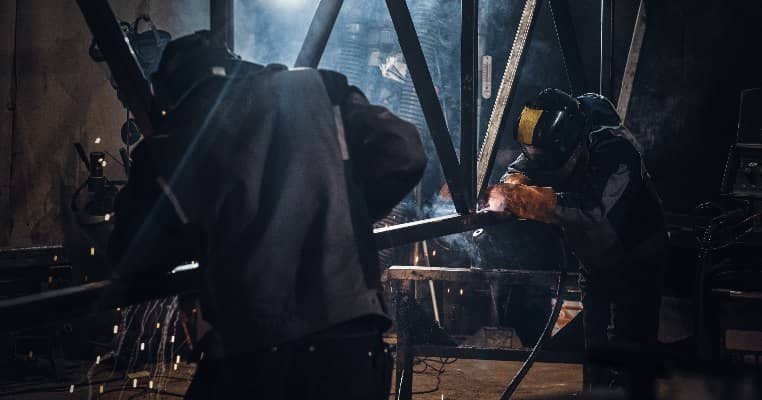
Metal fabrication turns raw metal into useful parts, assemblies and structures. Cutting, forming and joining give each component its shape, while planning and inspection help it meet the drawing and service requirements. The work combines engineering decisions with practical skill on the shop floor.
Understanding Metal Fabrication
Fabricators work with materials such as plate, sheet, pipe, tube and structural sections. The manufacturing route depends on the material, geometry, tolerances and quantity required. A custom frame, a storage tank and a sheet-metal enclosure may need very different combinations of processes.
Cutting and Shearing
Sawing, plasma cutting, laser cutting and waterjet cutting are different ways to separate material. Manual and computer numerical control (CNC) equipment each have a place, depending on accuracy, material thickness and production volume. Laser and waterjet cutting are not types of sawing.
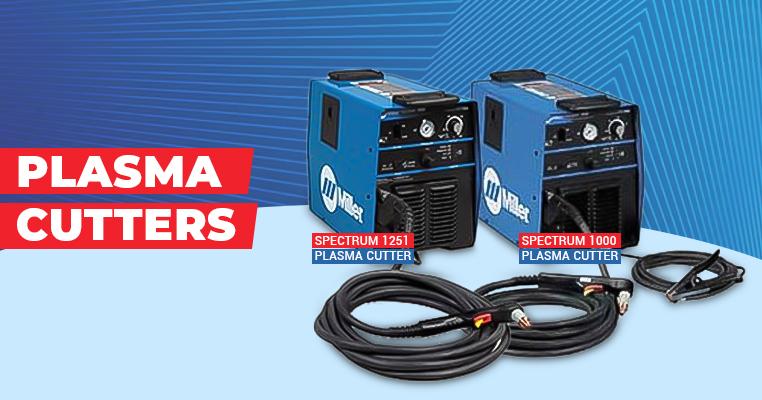
Shearing separates sheet or plate between cutting edges, commonly to make straight cuts. The material and thickness must fall within the machine’s capacity. Red-D-Arc offers plasma cutting equipment for suitable fabrication applications.
Forming and Bending
Forming changes a part’s shape through controlled deformation. A press brake bends sheet or plate between a punch and die; a plate roll uses rollers to create curves. These are distinct processes, with equipment selected for the material, thickness, bend radius and required shape.
Thinner material is not automatically more accurate or more appropriate. Choose the material and tooling to meet the design, and account for springback, grain direction and the capacity of the equipment.
Punching and Stamping
Punching uses a punch and die to create holes or openings. Blanking produces a cut-out piece that becomes the part or a starting shape for further work. Stamping is a broader group of press operations that can include cutting, bending and forming. Thickness limits depend on the material, tooling and press, rather than a single universal limit.
Welding and Assembly
Welding joins materials using heat, pressure or a combination of the two, depending on the process. Common arc welding processes fuse the joint using heat from an electric arc. The joint design, welding procedure, fit-up and operator technique all affect the result.
Skilled welders and fabricators carry out the work. Red-D-Arc supplies welding equipment and related equipment support; the project team must arrange the qualified personnel required for the job.
From Drawing to Finished Product
Start with a drawing that defines dimensions, materials, tolerances and acceptance requirements. Plan the sequence of cutting, forming, fit-up and welding, then arrange equipment and materials before production begins. Include inspection points and any required surface preparation, heat treatment or coating in the plan.
Fabricated metal appears in pressure vessels, heat exchangers, storage tanks, plant equipment, ships and building structures. Each application has its own service conditions and quality requirements, so the fabrication plan must suit the finished product.
Equipment for Your Fabrication Project
Red-D-Arc provides welding, weld automation, power generation, cutting, heating and blast cleaning equipment. Explore Red-D-Arc equipment and discuss the processes, capacity and rental requirements for your next fabrication project.