


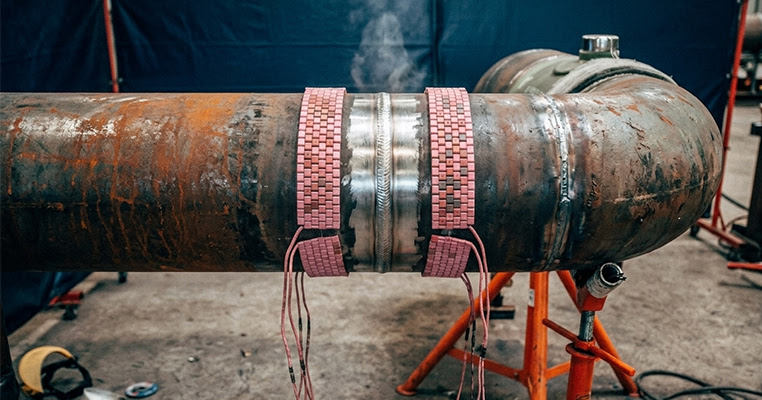
Post-weld heat treatment (PWHT) is a controlled heating and cooling operation applied when the material, design or governing specification requires it. Induction heating can deliver that cycle for suitable workpieces, with the right power source, accessories and temperature controls.
A good-looking weld is not proof that its internal properties meet the specification. Equally, heat treatment does not repair every welding defect. It must be part of an approved fabrication plan, supported by the required inspection and records.
What Does Post-Weld Heat Treatment Do?
In many steel applications, PWHT is used to reduce and redistribute residual stresses introduced by welding. Depending on the material and cycle, it can also change hardness and other properties in the weld and heat-affected zone. TWI’s overview of PWHT and stress relief explains these purposes.
There is no single temperature or holding time that suits every alloy. The specified cycle must account for the material, section thickness and service requirements. Excessive temperature or an unsuitable cycle can reduce properties that the component needs.
Distinguish Stress Relief from Hydrogen Post-Heating
Post-heating for hydrogen diffusion is different from a stress-relief PWHT cycle. It holds a susceptible weldment at an elevated temperature to help hydrogen diffuse out and reduce cracking risk. When required, its timing must be coordinated with preheat and welding rather than added casually after the part has cooled.
A hydrogen bake-out before repairing equipment exposed to hydrogen in service is another distinct operation. Use the specified procedure for the actual purpose. One type of heating should not be treated as a substitute for another merely because the equipment can reach the temperature.
How Induction Heating Works
An induction power source sends alternating current through a heating coil, creating a changing magnetic field. This induces electrical currents in a conductive workpiece, generating heat within the material. The coil arrangement and the workpiece’s properties affect how the heat develops.
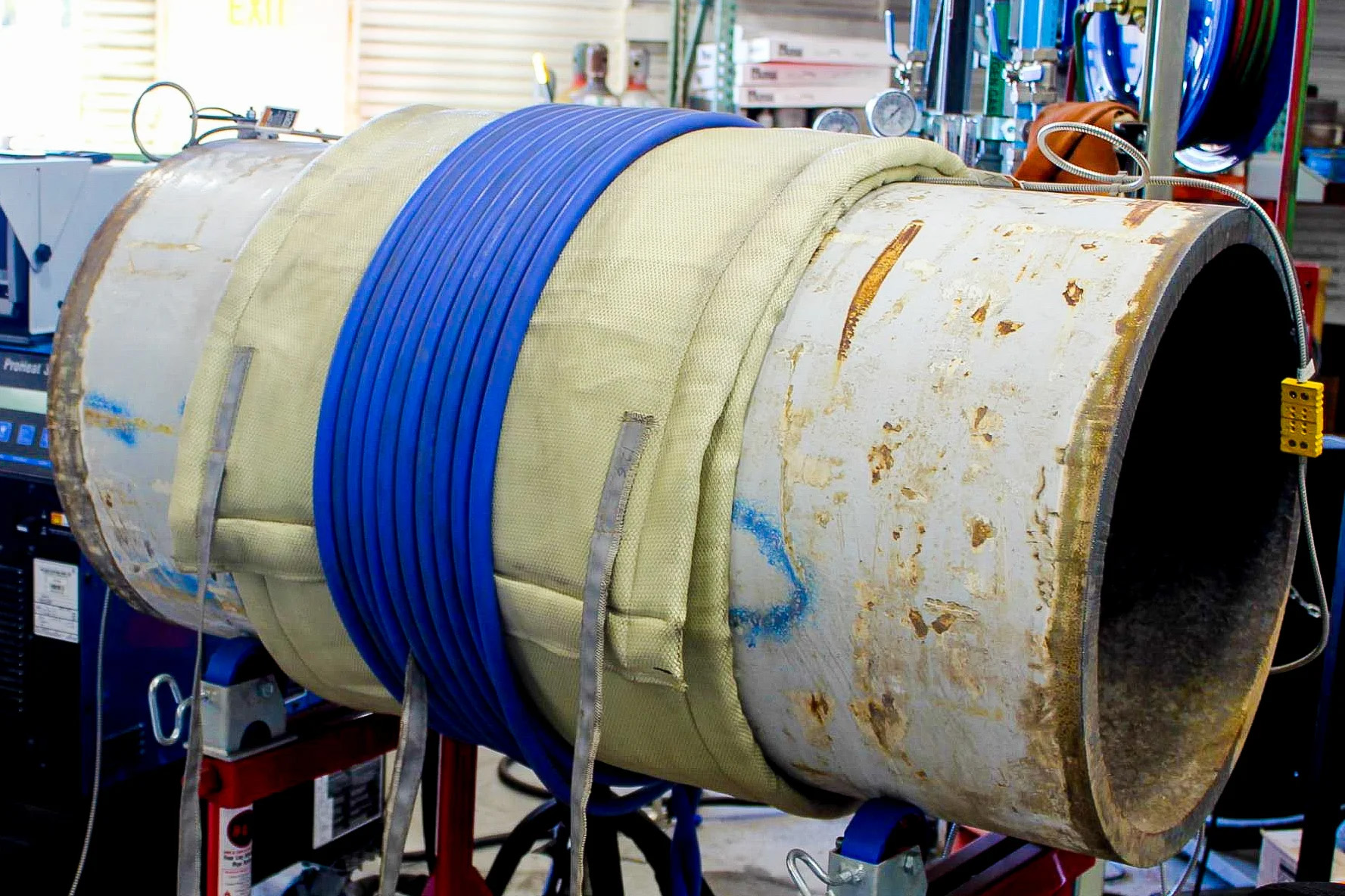
Induction is not limited in principle to magnetic metals. However, a particular welding heat-treatment system may have material and geometry limits, so confirm that the proposed equipment is suitable for the actual alloy and application. Heating depth and temperature distribution also depend on the setup; uniform through-thickness temperature must be demonstrated where required.
Choose the Heating Method for the Workpiece
Induction can offer rapid heating and controlled temperature without a flame. Flexible coils and suitable insulation can accommodate a range of pipe and plate shapes. The setup still needs sufficient power, appropriate cooling and a planned arrangement of temperature sensors.
Resistance heating uses electrical elements, often in flexible ceramic pads, to transfer heat into the workpiece. It remains a useful option for many local heat-treatment jobs, particularly where pad arrangements and separately controlled zones fit the geometry well.
A furnace can suit whole-component treatment when the part, transport arrangements and production plan allow it. Local treatment may be practical for larger assemblies, but it is not automatically an acceptable replacement for furnace treatment. The procedure must define the heated region and control the temperature differences that local heating creates.
Fuel-gas heating has applications, especially for some preheating tasks, but a manual torch should not be assumed capable of producing a specified PWHT cycle. Compare methods against the actual control, uniformity, recording and access requirements rather than a blanket claim that one method is always best.
Build the Complete Induction Package
The Miller ProHeat 35 supports preheating and stress-relieving applications with suitable configurations. Air-cooled, liquid-cooled and rolling accessories have different uses and temperature limits. Confirm the complete configuration before committing it to a PWHT job.
For higher-temperature treatment, selection includes more than the power source. Heating cables, insulation, cooling equipment, thermocouples and recording equipment must all suit the required cycle and workpiece. Use the manufacturer’s instructions and the heat-treatment procedure together when planning the setup.
Control and Record the Temperature Cycle
The procedure should define heating and cooling rates, the holding temperature and duration, and any limits on temperature differences. It should also establish sensor locations, the treated region, insulation and how the cycle will be recorded.
Attach and identify thermocouples as specified, and check the measurement and recording system before starting. A controller reaching its setpoint does not by itself establish that every required location has reached the holding temperature. Monitor the recorded cycle and address interruptions according to the approved procedure.
Protect personnel from hot workpieces and follow the equipment’s electrical, cooling and electromagnetic-field precautions. Keep cables and insulation in suitable condition, and establish how the workpiece will cool and remain supported after heating.
Assess Productivity with a Representative Setup
Induction may reduce time to temperature and simplify repeat work, but savings depend on the part, power availability and comparison method. Include setup, insulation, heating, holding, cooling and documentation when estimating total cycle time. Avoid assuming a fixed efficiency percentage or guaranteed return for every job.
Rental can be useful when heat-treatment demand varies or a project requires a particular configuration for a limited period. Red-D-Arc offers heat treating equipment and application support. Contact our team with the alloy, dimensions, specified cycle, available power and site conditions to discuss an appropriate package.