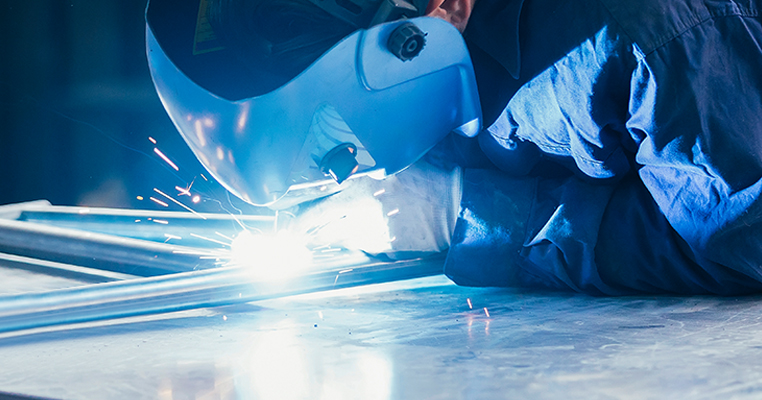


The Bug-O Modular Drive System mechanizes torch travel for suitable welding, cutting and gouging applications. Its modular design lets a fabricator combine a drive unit, carriage, rail and controls around the work, rather than use one fixed configuration for every job.
The system supports experienced operators by repeating a planned travel path. It does not select the welding procedure or compensate for every fit-up problem. Good preparation, setup and supervision remain essential.
How the Modular Drive System Works
A powered carriage travels on a compatible rail while a mounting arrangement holds the torch. The selected control module governs functions such as travel direction and speed. Depending on the configuration, additional controls provide stitch welding, weaving, gouging or programmed shape cutting.

Rail type, carriage and attachment method must suit the workpiece and position. Magnetic and vacuum attachment options serve different applications. Check compatibility, holding requirements and available clearance before assembling the system. The manufacturer’s Modular Drive System overview describes available modules and configurations.
Adapt the Setup to the Job
Straight travel can suit long seams or cuts, while an appropriate weaver can provide controlled torch oscillation. Linear and pendulum weaving have different movement patterns, so the choice should follow the joint and welding procedure. Cutting setups must use a compatible torch, controls and supporting equipment.
Storage tanks, pressure vessels, structural fabrication and shipbuilding can present opportunities for mechanization. Suitability depends on the actual joint path, surface condition, access and setup time. A modular system is flexible, but it cannot fit every workpiece or operating condition.
Improve Repeatability
Consistent travel speed and torch positioning can help reduce variation between welds. Repeatable settings are particularly useful where a long seam would otherwise require an operator to maintain the same movement for an extended period.
Mechanization does not guarantee an inspection pass. Confirm the procedure, joint preparation, fit-up, shielding and first-weld results before continuing production. Keep the inspection and acceptance requirements specified for the project.
Plan for Productivity
Compare total cycle time, including rail installation, alignment, repositioning and inspection, with the existing process. The greatest benefit may come from repeat work where setup can be reused. A demonstration on representative parts is more useful than assuming a fixed percentage saving.
Operator workload must also be assessed. Do not assume one person can safely supervise multiple systems: staffing depends on visibility, access, process stability and the site’s operating requirements.
Control Heat Input and Distortion
Repeatable travel can help maintain the conditions established in a welding procedure. Distortion still depends on joint design, restraint, welding sequence and heat input. Develop suitable settings and check the finished dimensions rather than expecting the drive system alone to prevent movement.
Support Safe Operation
Mechanized travel may reduce repetitive manual torch movement, but it does not remove welding, cutting or site hazards. Secure the rail and equipment, protect cables and hoses from moving parts, and follow the manufacturer’s instructions for the chosen setup. Provide arc protection, fume controls and any required fall protection.
Inspect the travel path before operation and maintain access to the controls and stopping functions. Keep people clear of moving equipment and manage cable routes to reduce trip and snag hazards.
Rent or Lease from Red-D-Arc
Red-D-Arc can help match a Bug-O system to your application. Share the material, joint geometry, welding or cutting process, work position and access constraints so the equipment package can be assessed before delivery.